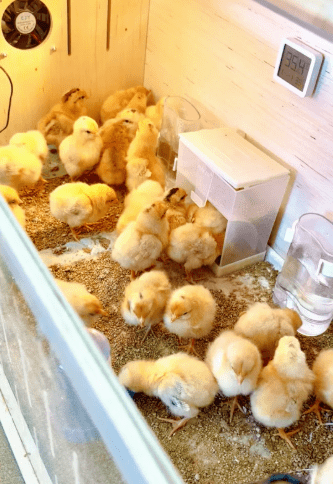
当课堂里传来雏鸡叽叽喳喳的叫声,当孩子们捧着自制育雏箱认真记录数据,当环保材料变身为能自动喂食的小鸡住所……NACIS的小学STEAM课彻底火了!当小鸡们啄破蛋壳,湿漉漉的小脑袋顶着无辜而呆萌的眼神,他们认识的第一批“人类”就是那些恨不得一天来看他们三次的NACIS小学生。When the soft chirping of newly hatched chicks fills the classroom, when children record data beside the brooders they built themselves, and when recycled materials are transformed into automated chick-feeding shelters - NACIS’s primary STEAM has become the newest sensation on campus. As the chicks break free from their shells, their tiny damp heads rising with wide, innocent eyes, the very first “humans” they meet are NACIS students who can’t help visiting them three times a day.
08 十二月, 2025
NACIS校园内竟暗藏养鸡场?MIT同款宝藏课堂带你探寻校园最火打卡点的奥秘NACIS STEAM PROGRAMME
高大上的MIT理念的项目制学习,落地却是如此的毛绒可爱
MIT-Level Project-Based Learning, Delivered Through Something Adorably Fuzzy
STEAM 课程作为近年来最持久不衰的大学申请方向,一直是学校关注的重点。作为12年一贯制的NACIS,更是将着眼点放得更远。从小学就启动的STEAM课程打破了传统的授课方式,融入前沿的教育理念,结合MIT“以问题为导向”与“手脑并用、迭代创造”双核心思维,不直接给学生答案,而是引导他们像科学家一样提出疑问、像工程师一样设计方案,再通过动手实践验证结论、迭代优化。NACIS已连续数年选派老师亲赴美国麻省理工学院(MIT)参与课程工作坊,将最前沿的教学理念和方式像种子一样带回了上海并在落地上狠下功夫。现在NACIS的小学STEAM课程广泛采用“项目式学习(PBL)”方法,内容覆盖生命科学、物质科学、地球与宇宙、信息技术及工程设计等多个领域,从“孵化小鸡”到“3D打印创作”,从“零碳建筑设计”到“火箭发射挑战”,从“生态农场搭建”到“游乐园构想”,每个主题都让孩子沉浸式探索。
STEAM education has long been one of the most sustained and influential areas in college admissions, and it has always been a major focus at NACIS. As a K-12 school, we adopt a long-term perspective. The primary STEAM programme breaks from traditional instructional models, integrates cutting-edge educational concepts, and is grounded in MIT’s dual principles of problem-driven inquiry and mind-and-hand iterative creation. Instead of providing direct answers, teachers guide students to ask questions like scientists, design solutions like engineers, test their hypotheses through hands-on experimentation, and continually refine their work. For several consecutive years, we have sent teachers to the Massachusetts Institute of Technology (MIT) to participate in professional workshops, bringing innovative pedagogies to daily teaching. Today, the primary STEAM programme adopts Project-Based Learning (PBL), covering life sciences, physical sciences, earth and space science, information technology, and engineering design. From “Hatching Chicks” to “3D Printing Creations,” from “Zero-Carbon Architecture” to the “Rocket Launch Challenge,” from “Eco-Farm Design” to “Amusement Park Engineering,” each theme inspires students into immersive inquiry.
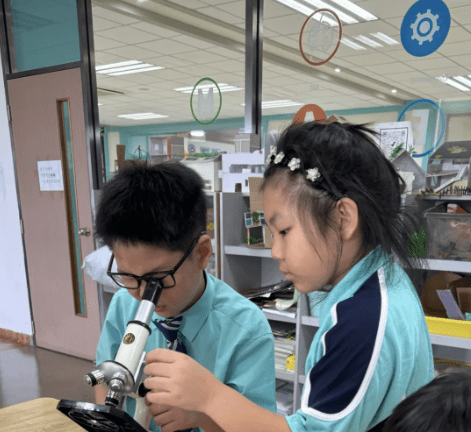
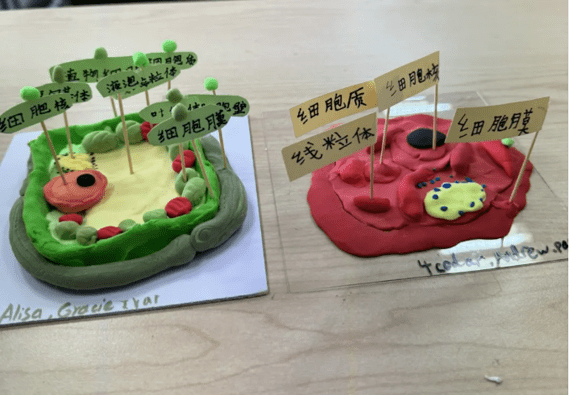
Take the chick-hatching project as an example. Students’ learning goes far beyond waiting for chicks to emerge from their shells. Instead, they engage in months of full-cycle inquiry: observing cells under a microscope; creating tangible clay models such as “sugar-cube factories” (plant cells) and “gel factories” (animal cells) to concretise abstract concepts; studying how temperature, humidity, and hygiene affect life; and designing brooders themselves. Students with advanced capabilities even take on extension challenges such as using Arduino technology to achieve precise environmental control - reducing energy consumption while applying principles of sustainable engineering. Throughout the 21-day incubation process, students may encounter embryo development failure or unsuccessful hatching. In adjusting their emotions, analysing the causes, and refining their solutions, they transform concepts such as “cells,” “microorganisms,” and “environmental regulation” into tangible, operational competencies. Through this process, students build not only scientific knowledge but also teamwork and problem-solving skills, shifting from passive listening to active inquiry. Practical engagement brings curriculum content to life and sparks genuine scientific creativity. The moment a chick breaks through its shell is also the moment students’ scientific curiosity shines brightest.
全维度能力锻炼:培育能够引领未来的核心素养
Develop Multi-Dimensional Competencies: Cultivating the Core Literacies for the Future
作为NACIS双语课程的代表,小学STEAM从来都是双管齐下。每节课程都会向孩子们明确这节课需要掌握的关键词汇。“细胞Cell”“显微镜Microscope”“微生物Microorganisms”“菌落Colony”这些可能在中学才会出现的学科词汇,随着教学自然融入课堂的小组讨论、方案设计、成果展示等环节,让孩子在理解科学概念的同时,潜移默化提升学科英语应用能力。
As a signature component of the NACIS bilingual curriculum, the primary STEAM operates through a dual-development model. Each session makes explicit the disciplinary vocabulary students are expected to master. Terms such as cell, microscope, microorganisms, and colony - concepts encountered in secondary school are naturally integrated into group discussions, design planning, and project presentations. This approach enables students to deepen their scientific understanding while gradually strengthening their academic English proficiency.
更重要的是,小学STEAM课程聚焦四大核心能力培养,全面塑造孩子的未来素养。以孵化小鸡项目为例,孩子们在制作育雏箱、搭建简单机械的过程中,锻炼动手实践能力;在显微镜观察细胞、记录雏鸡行为的过程中,提升细致的观察能力;在分析孵化失败原因、优化育雏方案的过程中,强化问题解决与反思复盘能力;在小组分工协作、共同完成项目、公开讲解成果的过程中,打磨沟通协调、团队决策与表达能力。在NACIS的这门课程中,每个孩子都能找到自己的角色,在适度挑战中建立自信,真正实现“学得懂、用得出、悟得深”。
More importantly, the primary STEAM programme foregrounds four core capacities essential for the future. Within the chick-hatching project, students advance practical and engineering competencies through brooder construction and basic mechanical design, strengthen observational and documentation abilities through microscopic analysis and behavioural recording, cultivate problem-solving and reflective thinking by examining causes of incubation failures and optimising protocols and develop communication, collaboration, and presentation skills through structured group coordination and formal dissemination of project results. In STEAM, every child finds a meaningful role. Through challenging tasks, they build confidence and achieve the goals of “deep understanding, effective application, and critical thinking”.
在NACIS就能完成的生态闭环,彰显教育的初心和温度
A Complete Ecological Loop at NACIS: A Reflection of Educational Purpose and Humanistic Care
作为一所涵盖G1到G12的一贯制学校,NACIS小学和中学从来都是两个相辅相成的整体,加之背靠NAE集团,很多项目从落地的那一天开始就有了得天独厚的优势。刚刚在2025年牛津大学赛德商学院气候变化挑战赛中夺得中国区总冠军、全球决赛第三名的“校园黑水虻多学科气候解决方案”就是NACIS中小学联合学生生态实践的典范:黑水虻分解厨余垃圾转化为高蛋白鸡饲料,鸡饲料喂养的鸡产出的优质蛋又能用于孵化新生命,形成“厨余垃圾—黑水虻—鸡—蛋—新生命”的闭环生态系统,让资源循环变得看得见、摸得着,并且在诺达校园就完成了一个生态的闭环。
As a K-12 school, NACIS operates the primary and secondary programmes as an interconnected whole. Supported by NAE, many initiatives enjoy distinctive advantages from the moment they are launched. A recent example is the “Black Soldier Fly Multidisciplinary Climate Solution,” which won the China Regional Championship and placed third globally in the 2025 Oxford Saïd Business School Climate Change Challenge. The project exemplifies cross-divisional ecological inquiry at NACIS: black soldier flies decompose kitchen waste; as they mature, they are converted into high-protein feed for chickens; the chickens then lay nutrient-rich eggs, which in turn can be used to incubate new life, forming a closed-loop ecosystem of food waste - black soldier flies - chickens - eggs - new life. The process transforms resource cycling from an abstract concept into a visible, tangible experience, completed entirely within the NACIS campus.
毛茸茸的小鸡软萌可爱,但在可爱的背后,却有着NACIS的教育者们最为珍贵的初心:认领小鸡前,必须签署“小鸡认领承诺书”,领取专属护理包,在日常投喂、清理、保暖的过程中学会善待生命、对生命负责。从使用环保材料制作工具到探究可持续育雏方案,环保理念与生命关怀早已融入孩子的一举一动。
Although the fluffy chicks are adorable, what lies behind their cuteness is the deeper educational commitment of NACIS. Before adopting a chick, each student must sign a “Chick Adoption Pledge” and receive a personalised care kit. Through daily feeding, cleaning, and temperature regulation, students learn to treat life with respect and to take responsibility for the wellbeing of another creature. From constructing tools using environmentally friendly materials to exploring sustainable brooding solutions, environmental consciousness and care for life are woven naturally into every action the students take.
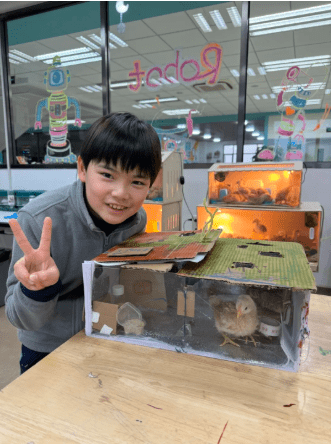
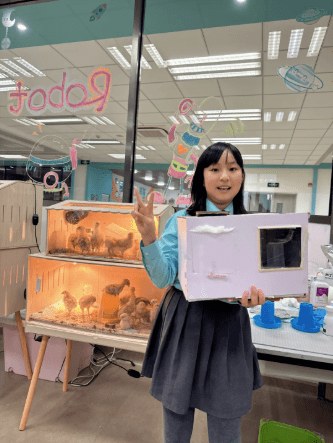
为了方便随时观察小鸡的状态,有小组在设计育雏箱时,特意预留了观察窗口,为了让小鸡们“不感到无聊”,还有的小组在箱子里面增加了专供小鸡的娱乐玩耍设施;为了解决无人照看时小鸡的吃饭问题,还有的小组特制了自动喂食盒,细心呵护每一个小生命;面对部分小鸡破壳失败的情况,孩子们没有哭闹或沮丧,而是在老师引导下分析原因——是温湿度控制不当,还是胚胎发育存在问题?然后认真记录下来,把失败变成宝贵的学习经验。这些瞬间,既展现了孩子们天真烂漫的本性,更让同理心和责任感在实践中自然萌芽并不断得以加强。
To better observe the chicks’ behaviour, some groups designed brooders with dedicated viewing windows. Others built small enrichment installations inside the brooders so the chicks would not “feel bored.” To address the issue of feeding when no one was present, another group developed an automatic feeder, ensuring that each chick received attentive care. When some chicks failed to hatch, the students did not cry or become discouraged. Instead, guided by their teachers, they analysed the causes - Was the temperature or humidity mismanaged? Were there issues in embryo development? They documented their findings carefully, transforming setbacks into valuable learning experiences. These moments reveal not only the children’s innocence and curiosity but also the organic growth of empathy and responsibility through authentic practice.

当STEAM课程跳出知识灌输的桎梏,当学习成为生命体验、责任践行与思维锻造的综合旅程,这门深植MIT工程基因与Eco School生态理念的小学课程,演变为了NACIS的宝藏课堂。它不满足于传授知识点,更用生态实践和迭代式项目挑战,把科学精神、责任意识与创新思维悄悄种进孩子心里——这里不是只有公式,更有触手可及的探索;除了知识学习,更充满了人文关怀和有温度的成长。正是这样充满是细节与温度的课堂,才能让从NACIS走出的学子既有直上青云的壮志,又有悲天悯人的同理心,成为真正的全球公民。
When a STEAM course moves beyond the simple transmission of knowledge and when learning becomes a journey of lived experience, responsibility, and intellectual growth, a course shaped by MIT’s engineering ethos and the Eco-School philosophy evolves into a true “treasure class” at NACIS. Rather than remaining confined to isolated knowledge points, we help students develop a scientific spirit, a sense of responsibility, and an innovative mindset through ecological practice and iterative project challenges. Learning encompasses not only formulas but also hands-on exploration, not only academic understanding but also humanistic care and meaningful personal growth. Such thoughtful and deeply human-centred learning experiences empower NACIS students to be ambitious while remaining grounded in empathy and prepare them to become compassionate, capable, and globally minded citizens.
其他相关新闻
News image ![重磅官宣|上海诺达双语获美国新英格兰院校协会NEASC国际认证 Congratulations to NACIS Shanghai for Successfully Passing the NEASC Accreditation - NEASC]() 学校新闻
学校新闻
 学校新闻
学校新闻 重磅官宣|上海诺达双语获美国新英格兰院校协会NEASC国际认证 Congratulations to NACIS Shanghai for Successfully Passing the NEASC Accreditation
重磅官宣|上海诺达双语获美国新英格兰院校协会NEASC国际认证 Congratulations to NACIS Shanghai for Successfully Passing the NEASC Accreditation